Academic Program.
How learning works at Gladwyne Montessori, from concrete materials to connected thinking.
Academic Program
Less Pressure. More Purpose
Your child does not move through isolated subjects or one-size-fits-all lessons. Learning here is active, connected, and personal, built through hands-on materials, guided instruction, independent practice, collaboration, research, reflection, and projects that link ideas across subjects. The work is rigorous, and it is rooted in how children actually learn.
Learning That Connects
Subjects connect here. A study of ancient civilizations can pull in geography, writing, literature, architecture, economics, art, and public speaking. A science investigation can involve measurement, data, research, writing, collaboration, and presentation. A Makerspace project can bring together math, engineering, design, and problem-solving. Children learn to think across disciplines.
Personalized Learning With Clear Expectations
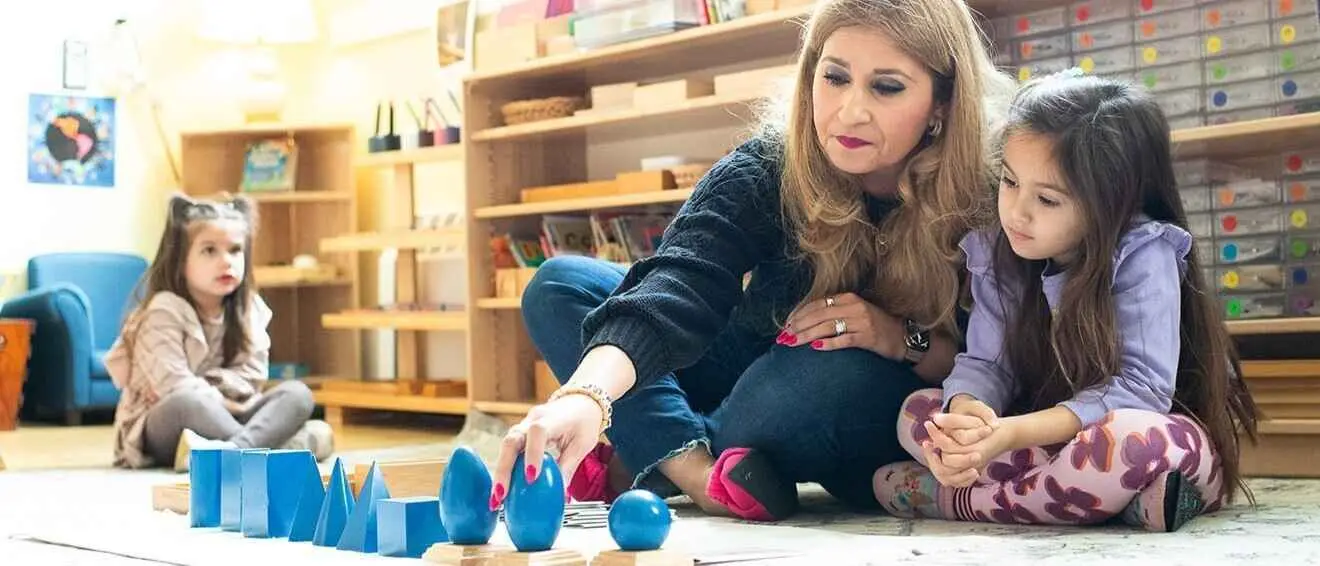
Teachers observe, assess, and plan carefully for each child. Lessons come individually, in small groups, and to the whole class. A child may work at different levels in different subjects, challenged where ready and supported where more time is needed. Structure stays. Students move from concrete materials toward abstract math, and build reading, writing, science, and history skills with research and digital tools in Upper Elementary.
Assessment That Supports Growth
Teachers watch progress in several ways. Reading assessments and writing evaluations show where a child is growing. Weekly spelling quizzes, math checkpoints, guided reading groups, and individual conferences give teachers steady information. Benchmark assessments begin in Kindergarten, and standardized testing starts in Grade 3. All of it guides instruction.
What this looks like in practice
A child's day includes uninterrupted work time, with individual lessons, small-group lessons, and independent practice on chosen work. Teachers observe, assess, and plan what comes next for each child. Subjects are not taught in separate silos. A history study may pull in writing, art, and geography. A science investigation may involve measurement, research, and a presentation to the class.
At home, you may notice your child talking through how things connect, asking questions that cross subjects, or explaining a project step by step. Because work moves from hands-on materials toward abstract thinking, understanding tends to hold. Ask what your child is working on. Ask to see a lesson. Ask how progress is tracked. The answers tell you a lot about the fit.