
Kindergarten, Ages 5 to 6.
What the Kindergarten year looks like at Gladwyne Montessori, and why it matters.
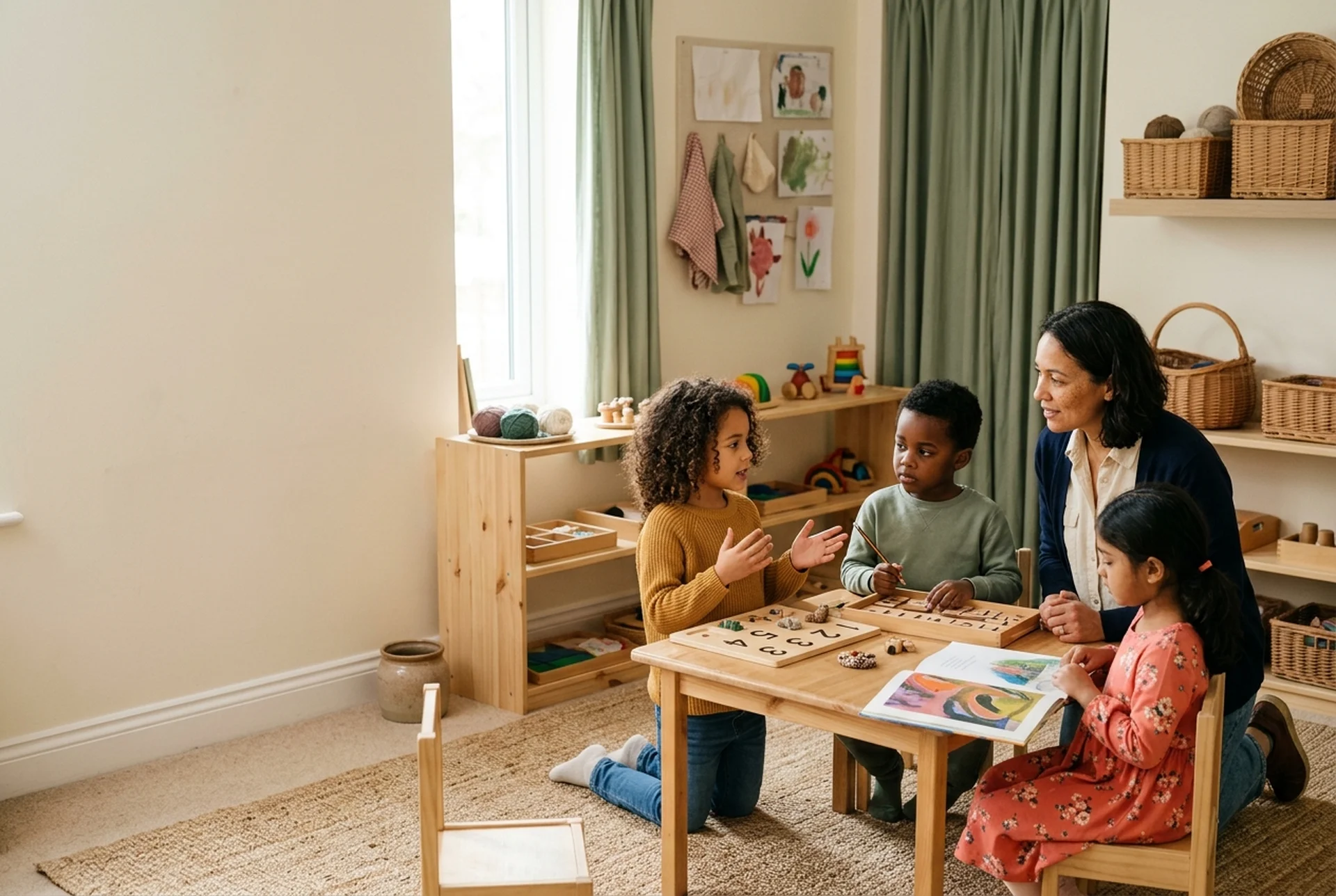
The Kindergarten room
In the Kindergarten year, children step into a new role in the room. They take on greater academic challenge. They support younger classmates. Weekly meetings with a reading specialist are part of the year. So are the special subjects: P. E., Music, Library, Spanish, Art, and Makerspace.
This is the capstone of the Primary cycle, the final year of a three-year stretch. After two years of building focus and foundational skills, children are ready for more. They collaborate across the community and prepare for Elementary.
Families who want the daily schedule, class size, or how the reading specialist works with each child can ask the school directly.
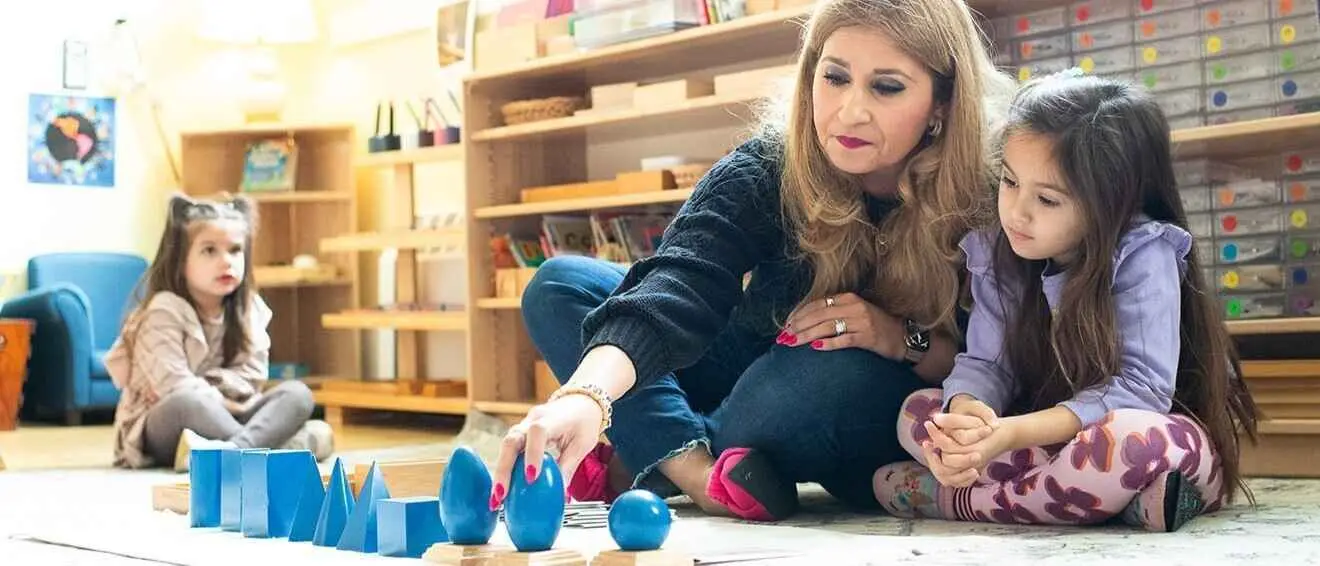
What to expect
The Kindergarten Year: A Transformational Capstone
Kindergarten is the capstone of the Primary cycle, not just the last year of early childhood. After two years spent building focus, foundational skills, social awareness, and work habits, children are ready for harder academic work. They take on greater challenge, support younger classmates, collaborate across the community, and prepare for Elementary.
Why the Kindergarten Year Really Matters
Montessori classrooms run in three-year cycles, and Kindergarten is the third year. It is the year everything your child has been building comes together. Children step into the role of leader, mentor, and confident learner. By finishing the full Primary cycle, they leave ready for Elementary and assured of their own abilities.
A Deeper Academic Experience
With strong foundations in place, Kindergarteners can handle more advanced concepts, work for longer periods, and take on meaningful challenges with growing independence. They work independently and in small groups. This strengthens critical thinking and builds confidence in what they can do. Academic experiences include special subjects alongside the classroom work.
Leadership in the Classroom Community
As the oldest children in the Primary classroom, Kindergarteners lead. They support younger peers, model classroom routines, and work in mixed-age groups. They take more responsibility for themselves and for the room around them. These moments build empathy, patience, and confidence, and they help children see themselves as valued members of a larger community.
Spanish
Spanish lessons are lively and full of movement, using songs, games, partner activities, and art. Children learn to count, build vocabulary, and form simple sentences. Teachers help them notice connections between Spanish and English. The goal is a foundation of curiosity and confidence in another language.
Music
Kindergarteners have music twice each week, once with their full class and once with a mixed group of Kindergarten peers. Sessions are full of rhythm and movement. Children explore pitched instruments, learn to read simple music notation, and try their own compositions.
What this looks like in practice
In a Kindergarten room, children do more of the work themselves. They choose an activity, finish it, and put it back. They read, write, count, and build. They help a younger child tie a shoe or find a puzzle. Teachers watch and guide. Parents can expect fewer reminders at home and more "I did it myself.
The change parents notice is follow-through. A child starts a task and stays with it. They carry their own bag, pour their own drink, and settle a disagreement with words. That independence is the point of the year. It is what makes the move to Elementary feel steady rather than sudden.