
Primary Program, Ages 3-6.
A three-year program for ages 3 to 6, ending with the Kindergarten year.
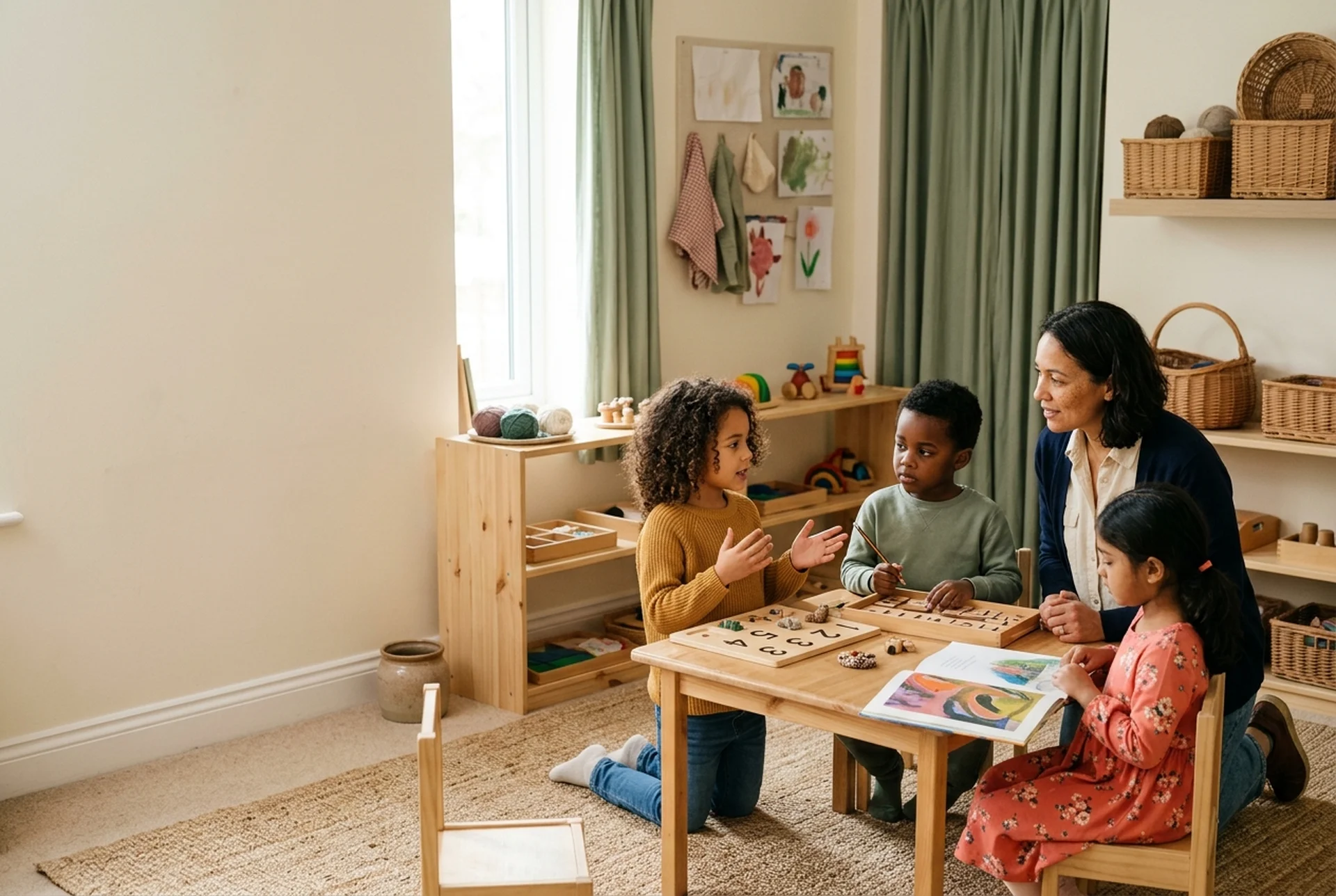
The Primary Program room
The Primary Program at Gladwyne Montessori is more than preschool. It is a three-year journey where children develop independence, concentration, early academic foundations, social confidence, and a lasting love of discovery.
What to expect
PreK-K Primary Program Ages 3-6
Primary is a three-year program for children ages 3 to 6. In a prepared classroom, children choose purposeful work that meets them where they are. They practice making choices, sustaining focus, and collaborating with others. Over time, they take pride in what they can do and begin to see themselves as capable learners.
More Than Preschool
Children ages 3 to 6 learn together in multi-age classrooms. Younger children observe older peers. Older children build confidence by modeling, mentoring, and leading. This three-year cycle creates stability, connection, and a strong classroom community. Kindergarten is the final year, when children take on greater leadership and deeper academic work.
A Classroom Designed for Exploration
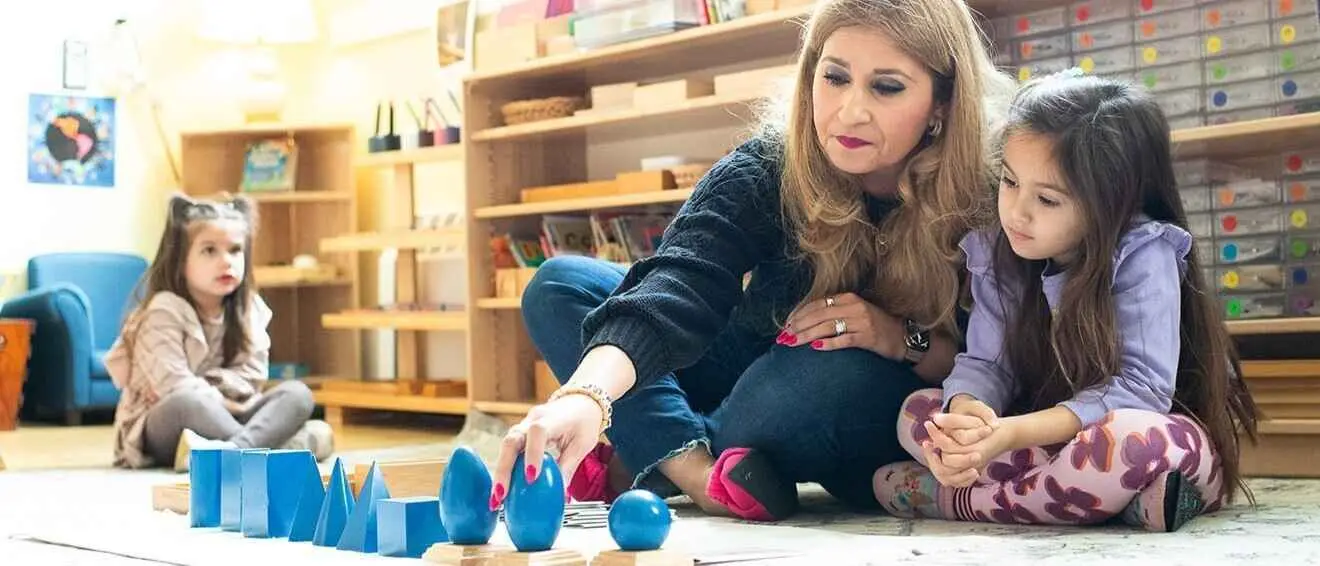
Primary classrooms are orderly and prepared for young learners. Children use hands-on Montessori materials that invite curiosity, repetition, concentration, and discovery. Child-sized tools and accessible shelves let children make purposeful choices and care for their environment. Teachers observe each child and introduce lessons when the child is ready.
The Power of Multi-Age Learning
In Montessori, children stay in the same classroom for three years. That creates a stable, connected community. The model supports academic growth, leadership development, and social-emotional learning. Children who might be the youngest in a single-age room get time to watch and grow before they lead.
Early Academic Foundations
Children arrive through carline and walk themselves in, then change into indoor shoes and put belongings away. The morning holds a two-to-three-hour work cycle: one child writes a story while another practices bead-chain multiplication. After recess and lunch, full-day students return to work. Kindergarteners also have enrichment specials. Practical life, sensorial, language, math, and cultural materials build skills step by step.
Preparing for the Kindergarten Year
By the third year, children are ready for more: leadership, independence, academic depth, and responsibility in the classroom community. The Kindergarten year lets them bring together everything they have been building. It also prepares them for the transition to Elementary.
What this looks like in practice
In a Primary room, children arrive, settle in, and start a long morning work cycle. They choose activities from open shelves: practical life, sensorial, language, math, cultural work. A teacher may give a lesson to one child or a small group. Children repeat an activity until they have it. Then recess, lunch, and for full-day students, more work in the afternoon.
The benefits show up at home. A child who has practiced pouring, buttoning, and putting work away wants to do things alone. A child who has stayed with a hard puzzle through several tries is less quick to give up. And because the same classroom holds the same teachers for three years, your child is known, not re-introduced each fall.