
Lower Elementary, Ages 6 to 9.
What Lower Elementary at Gladwyne Montessori looks like for a child ages 6 to 9.
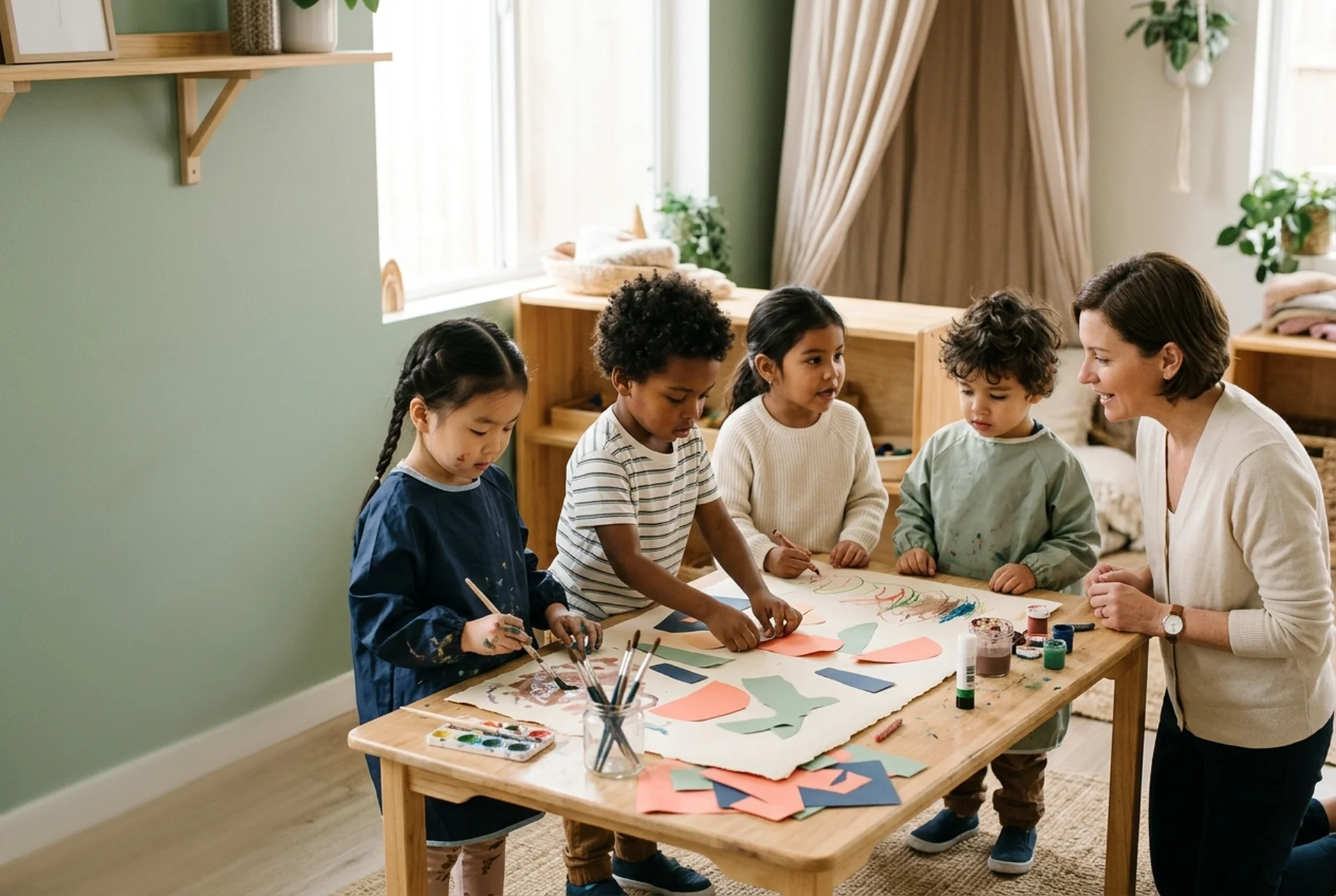
The Lower Elementary room
In Lower Elementary, children ages 6 to 9 work with hands-on materials and take on projects that reward thinking, not speed. A teacher gives lessons to small groups or one child, then steps back so the work belongs to the child.
The room is calm and busy at once. A child might spend a long morning on a math material, write about a science observation, or map a country they chose to study. Lessons are individualized, so a child moves ahead when ready and gets more practice when needed.
Children gain the habits that last: finishing what they start, asking good questions, and working alongside others without comparing themselves to a scoreboard.
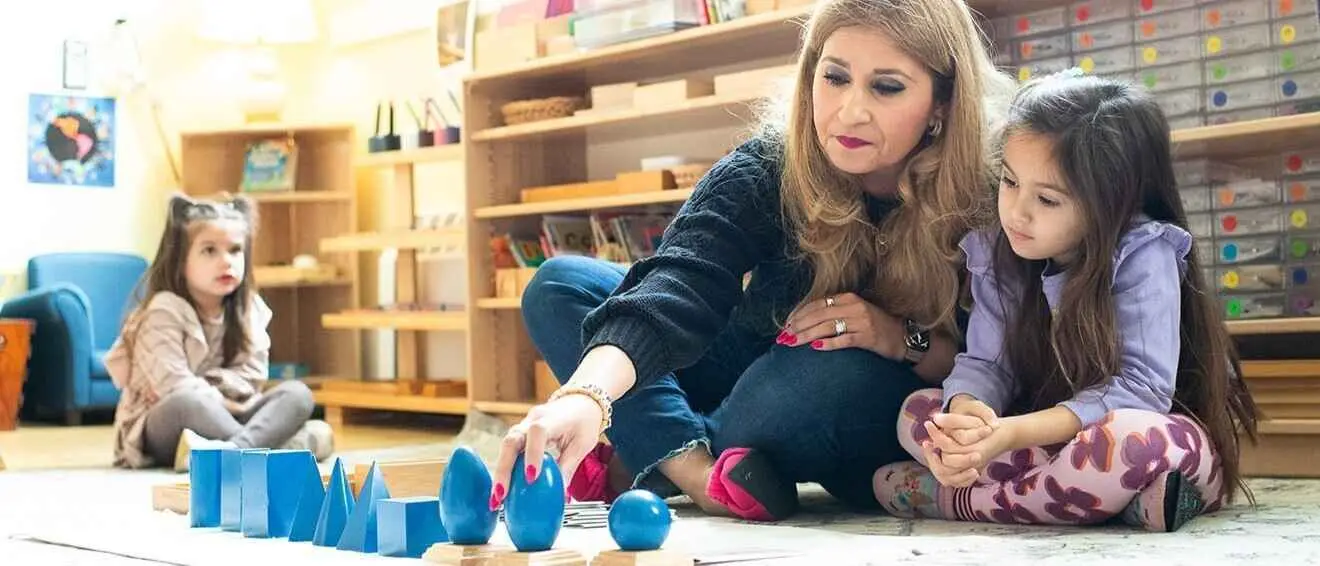
What to expect
Where Capability Becomes Confidence
Older Elementary students build on what they already have: academic skills, independence, and curiosity. The three-year cycle for ages 9 to 12 asks them to think critically, work with others, and lead. A personalized, inquiry-based curriculum builds mastery across core subjects and prepares them for middle school and beyond.
Academically Challenging. Deeply Personal.
At this stage children can handle abstract thought, big-picture reasoning, and long-term planning. They take on big projects, real-world applications, and cross-disciplinary work. Research projects, science experiments, persuasive essays, math investigations, and debates are common. Scaffolded lessons and open-ended inquiry build both skill and confidence.
A Learning Community That Builds Confidence
Upper Elementary classrooms are multi-age, so older students lead and mentor while younger ones find role models and stretch goals. Teachers offer increasing independence and set high expectations for accountability, collaboration, and integrity. Confidence grows when children are given real responsibility and trusted to rise to it.
How Community Shapes Confidence
Older children need help with more than reading and math. Teachers give one-on-one guidance in academic, social, and executive functioning skills. That might mean breaking a big project into steps, joining a game at recess, or keeping track of a notebook. A teacher sits with your child, works through the snag, and shows them how to do it next time.
Spanish
Spanish in Upper Elementary moves toward fluency and real use. Students hold conversations, respond to written prompts, and study grammar in more depth. Lessons cover reading, writing, listening, and speaking through role-play, storytelling, music, and cultural exploration. Children learn about the traditions and geography of Spanish-speaking countries.
Music
Upper Elementary music builds on rhythm, pitch, and music theory. Students read notation, compose original pieces, and perform. They try many instruments and styles, work in ensembles, and experiment with improvisation and basic recording. Music gives them room to express themselves alone and coordinate as a group.
What this looks like in practice
In a Lower Elementary room, children ages 6 to 9 spend the morning in an uninterrupted work cycle. They choose from lessons a teacher has presented, working alone or in small groups. Hands-on materials carry the math and language work. Projects run for days, not minutes.
At home, you notice a child who can start a task without being told, stick with it, and explain their thinking. They bring questions to the dinner table and look things up. They work with siblings or friends without needing to win. That is the point of the age.